The work
Google Merchant Center is one of the most under-managed channels in NZ/AU ecommerce. Most stores set it up once, push their full catalogue, and then ignore the disapprovals. The result: only 60?80% of products are actually approved and eligible to show in Google Shopping. The merchant is paying for traffic on a fraction of their catalogue.
For Army & Outdoors I've maintained Google Merchant Center for over 5 years. Daily product approval monitoring. Targeted fixes for disapprovals (GTIN issues, prohibited content flags, image policy violations, structured data mismatches). Active management of regional feeds across NZ, AU, US, EU.
Current state — Google Merchant Center health
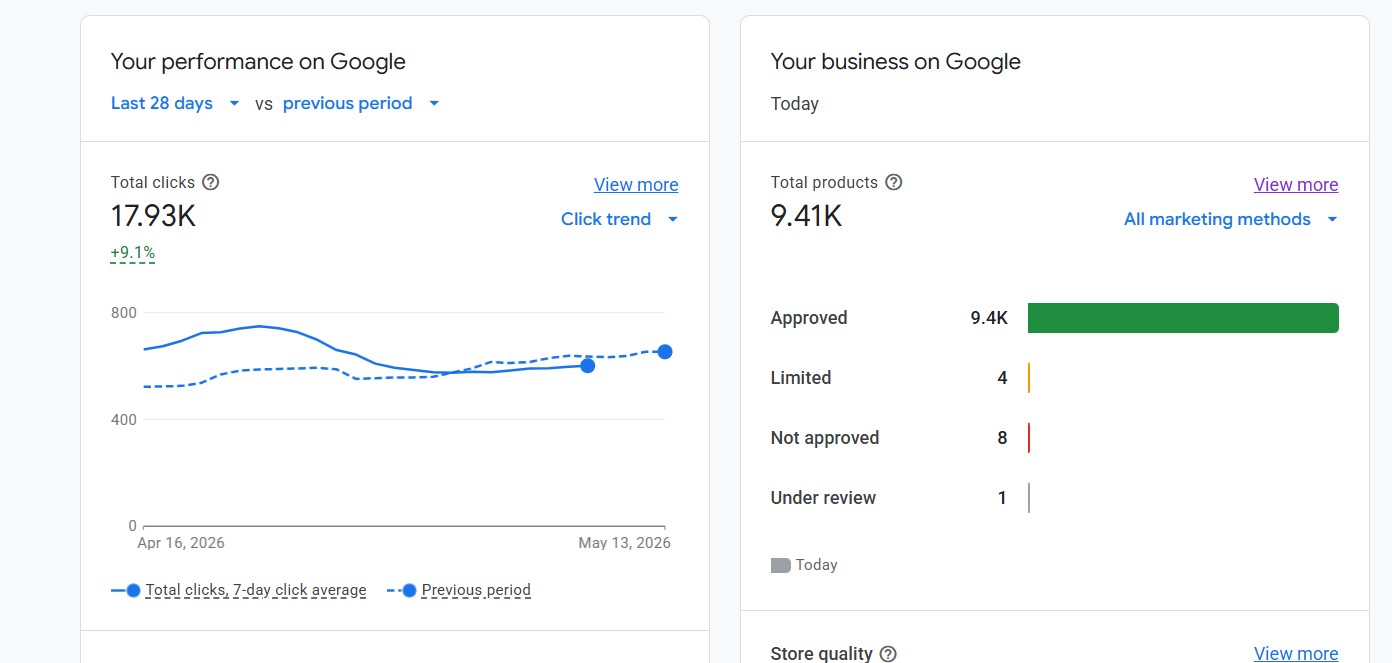
Live screenshot from the AAO Merchant Center dashboard (May 2026):

- 9,400+ products approved out of 9,410 total — 99.9% approval rate
- Only 4 limited (typically temporarily out-of-stock SKUs)
- Only 8 not approved (edge-case policy items being reworked)
- 17.93K clicks in last 28 days, +9.1% vs previous period
How this is maintained
- Daily monitoring — Merchant Center dashboard checked weekly minimum, daily during peak periods. Disapprovals are caught within 48 hours.
- Feed tooling — outbound feeds via Simprosys and DataFeedWatch, configured per-marketplace with rules to prevent common rejections (e.g., trademarked terms in titles, restricted product categories).
- Structured data audits — product schema on the storefront kept aligned with the Merchant Center feed. Mismatches between rich snippets and feed data are a common cause of "limited" status.
- Image policy compliance — image variants checked against Google's image policy (no overlays, no watermarks, correct backgrounds).
- Regional feed management — separate Merchant Centers per region with currency-correct pricing pulled via the multi-store sync engine.
Why this matters
If your Google Shopping ads are converting below industry norms, the cause is often not your bidding strategy — it's that 30?40% of your catalogue is silently disapproved and never shown. Fixing the feed health is usually a 2?4? improvement in eligible inventory, which translates directly to ad performance and organic Shopping listings (which are free).
I've done this for one retailer for 5+ years across 4 regional Merchant Centers. I can audit yours and tell you exactly what's broken, and what it would take to fix.